
Riding high on reversal of fortunes in diesel demand, India's petroleum product sales soared by 5.9 per cent to 7.93 million tonnes in November 2003, a reflection of upbeat industrial activity in the country.
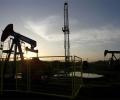
There are about 23 oil refineries in India with a combined capacity of 230 million tonnes per annum.

RIL said it had launched 'an internal probe' into its staff's detention.

Deora told Business Standard that a substantial volume of kerosene was also smuggled across the border, since the prices there were much higher. He added the government may have to rework various measures taken so far to curb the menace.
The government has chosen state-run GAIL (India) Ltd over Reliance Industries in setting up a Rs 2,500 crore gas cracker project in Assam.
After natural gas prices, the government looks set to bite the bullet on auto fuel prices, with a panel of ministers scheduled to meet on June 7 to decide on freeing petrol and diesel prices.

The Turkmenistan event underscores the lengths to which China's oil-and-gas companies will go to curry favour in resource-rich locales.

State-owned Oil and Natural Gas Corp (ONGC) may have won a large oil block in Venezuela but the Petroleum Ministry wants Reliance Industries to join the project to give stability to the venture.
Companies such as ONGC and Reliance have not been able to meet their work commitments for the blocks they had won under the New Exploration Licensing Policy rounds because of a crunch in availability of deep-sea drilling rigs. The official said oil ministry is moving a note for the consideration of Cabinet Committee on Economic Affairs for giving a drilling holiday from January 1, 2008, to December 31, 2010, for 33 blocks awarded in the fifth round of NELP.

Top government officials in New Delhi have started discussions with stakeholders ranging from shipping and container companies to export promotion councils to understand the impact of the Iran-Israel tensions and plan ahead. Inter-ministerial talks are also being lined up amid the crisis situation in West Asia, sources confirmed. While the crude flows are not directly under any threat, elevated oil prices remain a concern, according to officials.
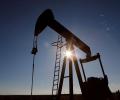
The wholesale price-based inflation spiked to 12.54 per cent in October, mainly due to rise in prices of manufactured products and crude petroleum. WPI inflation has remained in double digit for the seventh consecutive month beginning April. Inflation in September this year was at 10.66 per cent, while in October 2020 it was at 1.31 per cent.
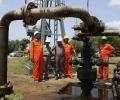
The petroleum ministry has told ONGC to give away 60%stake plus operating control in India's largest oil and gas producing fields of Mumbai High and Bassein to foreign companies, according to an October 28 letter to the state-owned company. Amar Nath, additional secretary (exploration) in the Ministry of Petroleum and Natural Gas, wrote a 3-page letter to ONGC chairman and managing director Subhash Kumar, saying productivity of the Mumbai High and Bassein & Satellite (B&S) offshore assets under state-owned firm was low and international partners should be invited and given 60 per cent participating interest (PI) and operatorship. This is the second time since April that Nath, who is part of the ONGC management as the longest-serving government nominee director on its board and often considered a potential candidate to replace Kumar next year, has written an official letter, painting a poor picture of the company's performance.
Reliance Industries Ltd plans to invest over Rs 4,500 crore (Rs 45 billion) in laying 5,895 km of product pipelines across the country as a precursor to begin the retailing of petrol and diesel.
The Prime Minister's office is understood to have declined an extension to Subir Raha, the high profile chairman of Oil and Natural Gas Corporation.
Banking and energy sector companies are the highest advance tax paying corporates in the country, owing to a surge in business and personal lending coupled with rising energy consumption, according to finance ministry sources.

This is significantly higher than the government revenues of Rs 500 crore (Rs 5 billion) that ADAG has been claiming in an advertising campaign that it launched on August 17. The exercise marks the first time the directorate general of hydrocarbon, the upstream oil regulator, has worked out such an estimate. The exercise is not carried out in the normal course for oil or gas fields.
The finance ministry has asked state-run oil companies to shell out an interim dividend of Rs 2,600 crore (Rs 26 billion) for the year to March 2003, a government official
The Petroleum Federation of India, the apex body of public and private oil firms, has submitted to the oil ministry a 100-day agenda for the new government. On top of its list is decontrol of petrol and diesel prices. Currently, public sector retailers sell auto fuel at government-dictated rates, which the private sector competition is unable to match in times of high input cost (crude oil prices).

Industrialist Anil Ambani on Tuesday dared the petroleum ministry to take back the ownership of gas fields from Reliance Industries Ltd if it seriously believed that terms of the contract were violated by Mukesh Ambani-led firm, which he alleged was wanting to make a super-profit of Rs 50,000 crore (Rs 500 billion).
LN Mittal is getting a senior bureaucrat from the ministry of petroleum and natural gas to run his first-ever venture in the refining business, the Rs 18,919 crore (Rs 189.19 billion) Bhatinda refinery.
The irony, of course, is that even the suggestion that the petroleum and natural gas ministry thought was practical and workable has few takers in the government. Among the many suggestions on petroleum product prices, the Chaturvedi Committee had recommended dual pricing of diesel.

Russia has been grappling with sanctions slapped by the US and its allies over Moscow's invasion of Crimea.

The wholesale price-based inflation in February rose to 13.11 per cent on hardening of prices of crude oil and non-food items, even though food articles softened. After two months of mild easing, WPI inflation accelerated in February and remained in double digits for the 11th consecutive month, beginning April 2021. WPI inflation last month was 12.96 per cent, while in February last year, it was 4.83 per cent. The rise in crude oil and natural gas prices after the Russian invasion of Ukraine, beginning February 24, has put pressure on the wholesale price index, even though food articles saw softening across categories of vegetables to pulses to protein-rich items.

The wholesale price-based inflation declined to over two-year low of 3.85 per cent in January on easing prices of manufactured items, fuel and power, even though food articles remained expensive. This is the ninth straight month of decline in the rate of wholesale price-index (WPI) based inflation. The WPI inflation was 4.73 per cent in January and 13.43 per cent in February, last year.

Closely watched by the world for any escalation, the Iran-Israel conflict is already showing early signs of stress for India Inc - longer deliveries, doubling freight rates, extended working capital cycles, and higher costs. For those yet to feel the heat, there is growing apprehension and nervousness over future developments, observed industry executives.
Home minister P Chidambaram, who briefed reporters on the Cabinet decisions, said in his opinion there was no bar on the government from announcing a price cut even after polls are announced. State-owned fuel retailers Indian Oil Corporation, Bharat Petroleum and Hindustan Petroleum are selling petrol at almost break-even point while they make Rs 3.26 a litre profit on diesel sales.
The wholesale price-based inflation eased for the second consecutive month in January at 12.96 per cent, even though food prices hardened, the government said on Monday. WPI inflation has remained in double digits for the tenth consecutive month beginning April 2021. Inflation in December 2021 was 13.56 per cent, while in January 2021, it was 2.51 per cent.
India's crude oil production rose by 3.2 per cent in May on back of better performance by state- owned oil major Oil and Natural Gas Corp (ONGC), while refinery output remained unchanged.
Cairn India has received a government approval that will enable it to proceed with the development of a pipeline to transport oil from its flagship fields in Rajasthan.
With this the only minister without a portfolio is Oscar Fernandes
